Most drivers only notice exhaust smoke when it looks wrong. Maybe you catch a cloud in the rearview mirror, or someone behind you mentions that your car is “smoking a lot.” The color of those fumes can tell you a surprising amount about what is happening inside the engine.
Some colors are harmless, others are early warnings that deserve attention before they turn into major repairs.
What Exhaust Smoke Color Can Tell You About Your Engine
Exhaust is really just leftover gases from combustion heading out of the tailpipe. When the mixture of fuel, air, and fluids is healthy, you rarely see much more than a light haze on cold mornings. When something changes inside the engine, extra fuel, oil, or coolant can slip into the exhaust stream and tint that smoke.
Color is one of the quickest clues. White, blue, black, or gray exhaust all point in different directions. As technicians, we pay close attention not just to the color, but also to when it appears, how thick it is, and whether it goes away or sticks around as the engine warms up.
Normal Exhaust vs Problem Exhaust
A brief puff of vapor on a chilly start is usually normal. Cold air meets hot exhaust, and water vapor turns into a small cloud that disappears quickly. Once the engine is warm, that haze should fade until you barely notice anything at idle or on light acceleration.
Problem exhaust is different. It may hang in the air, leave a visible trail as you drive, or show up mainly when you accelerate hard or coast down a hill. If you find yourself smelling strong fumes or seeing smoke in the mirrors often, it is time to treat that as a real symptom, not just a quirk.
White Exhaust Smoke: Steam or Something More Serious?
Light, wispy white vapor right after a cold start is usually just condensation burning off inside the exhaust system. It tends to clear within a few minutes and does not smell sweet or harsh. That kind of short-lived cloud is generally nothing to worry about.
Thick, persistent white smoke is a different story. Heavy white exhaust that lingers can mean coolant is getting into the combustion chambers. That often comes with a sweet smell, possible overheating, or a coolant level that keeps dropping. Coolant in the exhaust can point to issues like a blown head gasket or a cracked head, which are problems you want to catch as early as possible.
Blue Exhaust Smoke: Oil Where It Should Not Be
Blue or blue gray smoke usually means engine oil is being burned along with the fuel. You might see it:
- On startup, if valve stem seals are worn and let oil drip into the cylinders while the car sits
- Under acceleration, if piston rings are worn and oil is getting past them
- After long periods of idling, when pooled oil finally burns off as you pull away
Burning oil often brings a sharp, oily smell and may show up as a steady drop on the dipstick between oil changes. Over time, that oil burning can foul spark plugs, clog the catalytic converter, and leave carbon deposits inside the engine. We often view blue smoke as a sign that the engine needs attention sooner rather than later, even if the car still feels strong.
Black or Dark Exhaust Smoke: Too Much Fuel
Black exhaust smoke almost always points to a rich condition, meaning too much fuel and not enough air. This is more common on older vehicles and some diesels, but it can show up on modern gas engines when something is off. You might see it when you hit the throttle hard, climb a hill, or even at idle if the problem is severe.
Possible causes include leaking fuel injectors, a faulty sensor that tells the engine to add extra fuel, a clogged air filter, or problems with the fuel pressure system. Besides wasting fuel, running rich for long periods can damage oxygen sensors and the catalytic converter. If we see black smoke during a road test, we usually recommend diagnosing it fairly quickly to protect the rest of the exhaust system.
Gray Exhaust Smoke: The In-Between Color
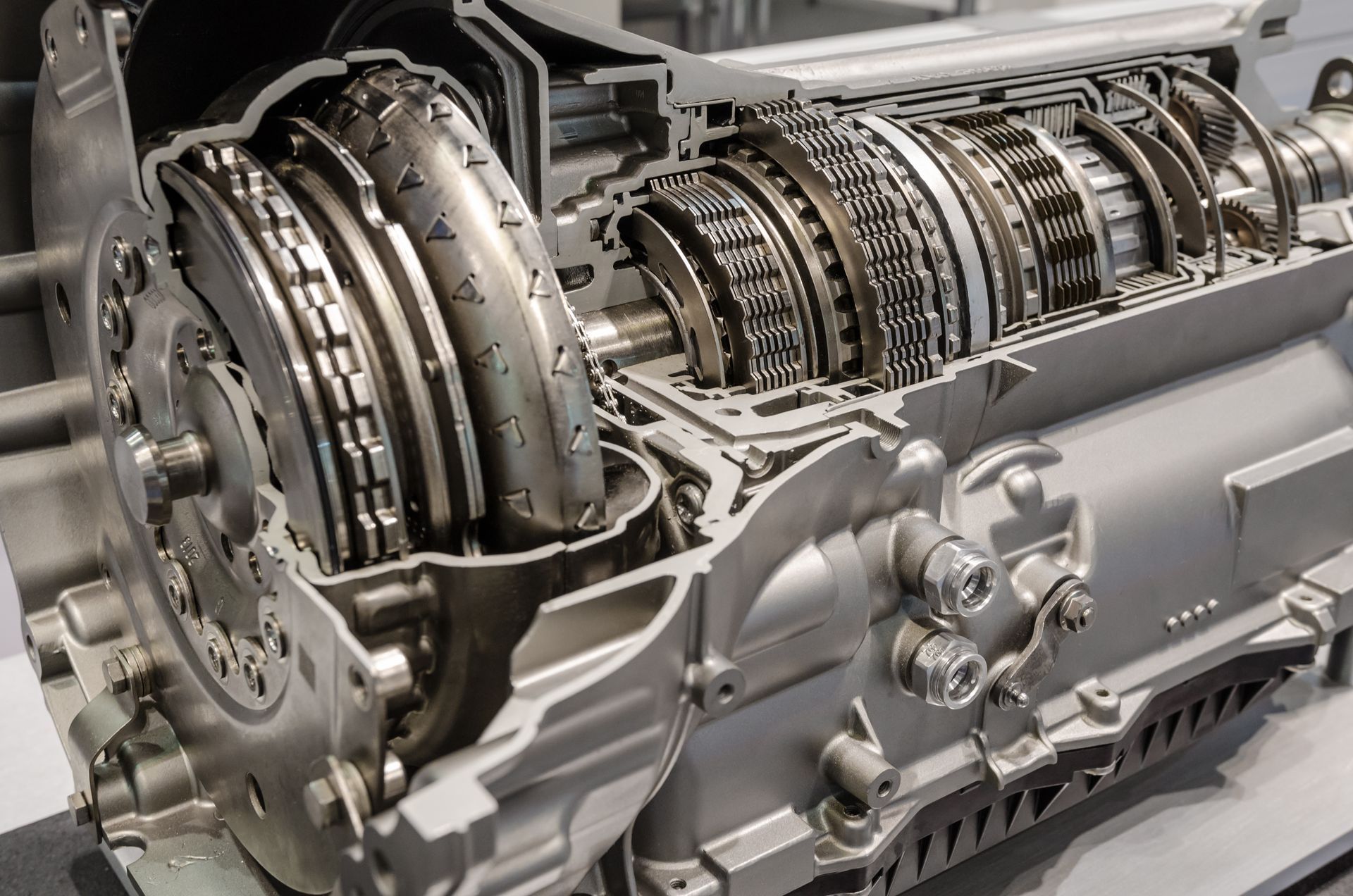
Gray smoke can be trickier to pin down. It may be a mix of oil and fuel issues, or it can relate to specific systems like turbochargers or crankcase ventilation on certain engines. Some transmissions that feed vacuum into the intake through a modulator can even pull transmission fluid into the engine, which then burns and creates grayish exhaust.
Because gray smoke can mean several things at once, the pattern matters. Does it show up mostly on boost, during long descents, or at steady cruise? Those details help us figure out whether you are dealing with an engine, turbo, or even transmission-related concern.
Simple Checks Drivers Can Do Before a Visit
You do not have to diagnose the color yourself, but a few simple observations can help when it is time to talk with a technician. Try to notice:
- When the smoke appears most, cold start, hard acceleration, idle, or all the time
- What it smells like, sweet, oily, or very sharp and fuel like
- Whether your oil or coolant levels keep dropping between services
If you are comfortable doing so, check your oil level and coolant reservoir when the engine is cool. Any rapid loss there, combined with visible exhaust smoke, is a sign the car should be inspected rather than driven for long trips.
Get Exhaust Smoke Diagnosis in Plano, TX with Kwik Kar Auto Repair – Parker Road
If your exhaust smoke has changed color, gotten thicker, or started hanging in the air, your engine is trying to tell you something. We can look at the smoke pattern, check fluid levels, and run tests to find out whether you are dealing with oil burning, coolant intrusion, a rich fuel mixture, or something else entirely.
Schedule exhaust smoke diagnosis in Plano, TX with
Kwik Kar Auto Repair – Parker Road, and we will help you get those fumes back to normal.